Human Reclamation Units
World War ZHuman Reclamation Units are specialized teams created to recover infected or behaviorally transformed people rather than kill them on sight. In the winter fighting described by Todd Wainio, they function as a humanitarian alternative within a military campaign, using tranquilizer darts, restraint, transport, and rehabilitation efforts to treat dangerous humans as recoverable members of society. Their existence gives institutional form to the belief that survival should not erase the value of a human life.
Mission and Operating Conditions
Human Reclamation Units are described as little more than glorified animal-control teams, but that comparison captures the brutal practicality of their assignment. They worked among quislings and ferals in areas where ordinary quarantine and military clearance operations had to continue. Quislings could be darted, tied down, and transported to rehabilitation clinics, reflecting the hope that their condition might be reversed. Ferals presented a much greater physical danger: many were adolescents or adults, and unlike helpless victims they could move quickly, think tactically, and choose to attack.
The units faced an environment made more dangerous by the collapse of ordinary urban boundaries. Clearing operations had to move through suburban sprawl, commercial strips, shopping centers, and cheap housing that stretched between former cities. Wainio describes this built-up “in-fill” as a landscape that had to be cleared block by block before a quarantine perimeter could even be established. Winter simplified some aspects of the campaign, but it did not make the terrain safe; it merely changed which threats the reclamation teams encountered.
Methods and Limits
The central tool of Human Reclamation Units was the tranquilizer dart. Against a restrained or exposed target, darting offered the possibility of capture without lethal force. Against a charging two-hundred-pound feral, however, the method could fail because the sedative might not take effect before impact. Several members of the units were badly injured, and some were killed. Military commanders therefore assigned infantry escorts, creating a deliberate partnership between teams committed to saving lives and soldiers prepared to use lethal force when rescue failed.
This division produced a sharp ethical contrast. When a dart failed, soldiers used Cherry PIE ammunition, whose incendiary effect could kill a feral in spectacularly violent fashion. The reclamation workers objected because they were volunteers bound by the principle that every human life was worth an attempt at rescue. Their opposition was not presented as naïve sentimentality alone: later results appeared to vindicate them, since many people whom soldiers would have shot immediately were successfully rehabilitated. The units therefore demonstrated that a humane policy could be operationally effective, provided it received enough personnel and resources.
Relations with Other Animals and Units
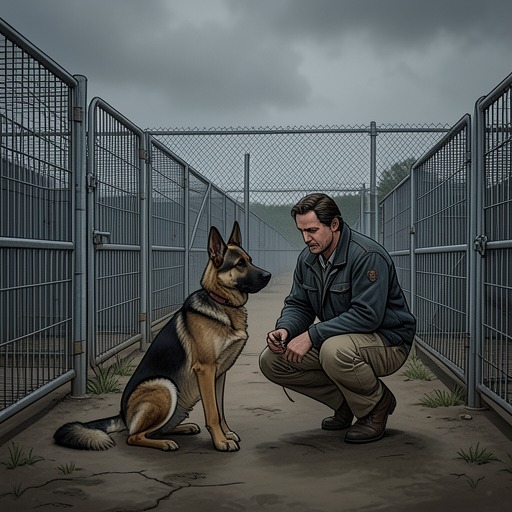
Human Reclamation Units belonged to a broader wartime system in which humans increasingly relied on animal perception and animal labor. Military dogs were used in triage to identify infected people by scent, a method adapted from Israeli practice in which civilians passed dogs kept in cages. Dogs themselves could panic or attack handlers, especially early in the war, but their instinctive terror of the infected was treated as a life-saving diagnostic capacity. Human reclamation teams operated within the same field of danger, where the distinction between controlling an animal and recovering a person became disturbingly unstable.
Their missions were also threatened by feral animal packs. Wild dogs and other abandoned pets had formed predatory groups, particularly in low-infestation transition zones, and early long-range missions were often aborted before escort dogs were deployed. F-lions posed an even more alarming danger: large, powerful cats adapted to a postwar ecology shaped by rats, corpses, ruined settlements, and the disappearance of human control. These predators made the units’ already difficult movements through devastated territory more hazardous, while also showing that the crisis had transformed the wider ecosystem rather than merely producing a human epidemic.
Ethical Significance and Legacy
The units embody the conflict between emergency necessity and the preservation of moral limits. Other soldiers could treat ferals as immediate targets, especially when a failed dart placed an entire squad at risk. Human Reclamation Units insisted that the target’s altered behavior did not automatically cancel the target’s humanity. Their policy required time, specialized labor, and exposure to danger, all resources that a collapsing or mobilized society might prefer to spend elsewhere.
Their recorded success gives the organization its lasting significance. The teams were not simply a softer version of military force, nor were they portrayed as incapable of recognizing danger. They accepted that some rescues would fail and that escorts might have to kill, yet they maintained rehabilitation as the first response wherever circumstances allowed it. In that sense, Human Reclamation Units preserved a legal and moral distinction between a threat that must be stopped and a person who might still be recovered. Their work marks one of the clearest attempts to rebuild civilization without making extermination the default meaning of public safety.